Orthotics
Do You Need a Custom Orthosis or a Knee Brace? Signs, Options, and What to Expect
By the South County Artificial Limb & Brace care team · · 6 min read
If pain, instability, or weakness is changing the way you move, an orthosis — a supportive brace or insert — may help. The right answer depends on your anatomy, your condition, and your activity, which is why a professional biomechanical evaluation matters more than anything you can buy off a shelf.
What does an orthosis actually do?
An orthosis supports, aligns, protects, or offloads part of your body. Done well, it relieves pain, improves how you walk, prevents a deformity from progressing, and protects healing tissue. Orthotic care spans everything from custom foot orthotics to ankle-foot orthoses (AFOs), knee bracing, and diabetic footwear.
What are the signs you might need one?
You do not need to diagnose yourself — that is our job together with your physician. But these are the situations that most often bring people through our doors:
- Foot, ankle, or knee pain that worsens with standing or walking
- A sense of instability, giving way, or frequent ankle rolls
- Drop foot — difficulty lifting the front of your foot when you step
- Knee arthritis pain that flares on one side of the joint
- Diabetes with numbness, calluses, or pressure sores on your feet
- Recovery after an injury or surgery where the joint needs protection
Custom or off-the-shelf: which is right for you?
Off-the-shelf devices have a place — for short-term protection or mild support, a well-chosen prefabricated brace can do the job. Custom devices earn their keep when your anatomy, condition, or activity demands a precise fit: complex foot shapes, long-term daily wear, high activity levels, or conditions where pressure in the wrong place causes real harm.
An honest evaluation should always come first. We will tell you plainly when an off-the-shelf option serves you just as well — and when custom is worth it.
What knee bracing options exist?
For ligament instability — including ACL injuries and post-reconstruction protection — we fit the Össur CTi, a rigid custom ligament brace trusted by athletes and workers alike.
For knee osteoarthritis, an unloader-style brace such as the Össur Unloader shifts load away from the painful compartment of the joint, which can meaningfully reduce day-to-day pain. Whether bracing fits your treatment plan is a decision to make with your physician.
What should you expect at a fitting?
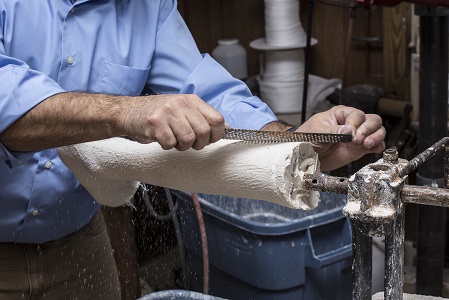
A fitting starts with a biomechanical evaluation: how you stand, how you move, where the pressure and pain live. Custom devices are then cast or measured, fabricated, and fitted with careful adjustment. Expect a short break-in period as your body adapts, and a follow-up to fine-tune the fit. A device that hurts is a device that gets left in the closet — our job is to make sure yours gets worn.
Frequently asked questions
- Do custom orthotics hurt at first?
There is normally a short break-in period while your body adjusts to new support and alignment. Mild awareness is normal; pain is not. If anything hurts, we adjust the device — that is part of the service.
- Do I need a prescription for a custom orthosis?
Custom orthoses generally require a physician's prescription, especially when insurance is involved. Call us and we will help you coordinate the paperwork with your doctor's office.
- How long does a custom brace or orthotic last?
It depends on the device, your activity level, and how your body changes. Quality custom devices are built for daily use over years, and we service and adjust what we fit.