Prosthetics
How Do You Get a Prosthetic Leg in Rhode Island? A Step-by-Step Guide
By the South County Artificial Limb & Brace care team · · 7 min read
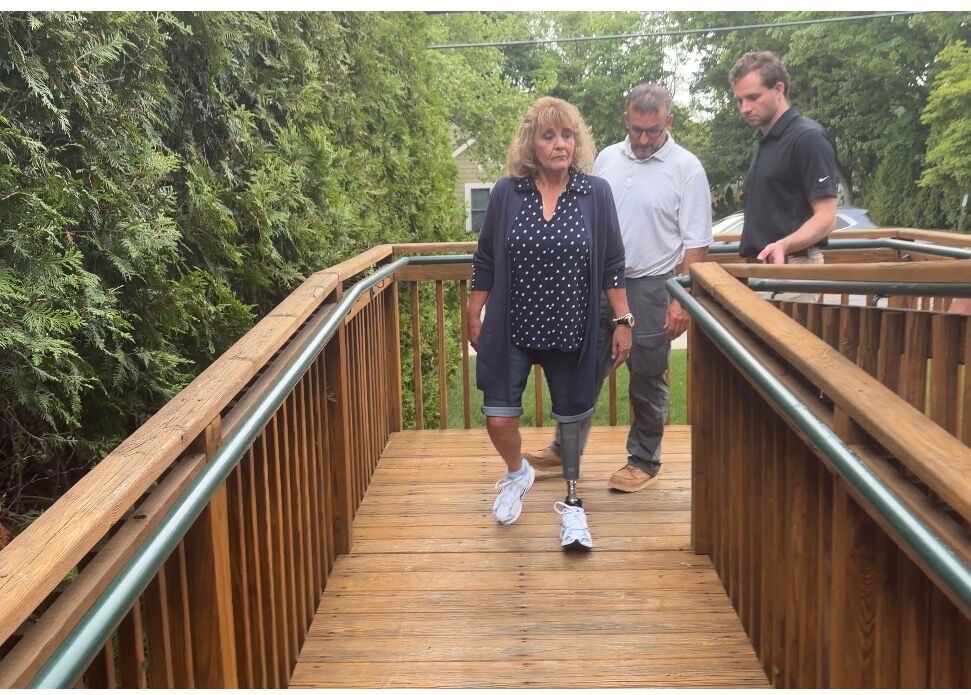
Getting a prosthetic leg follows a clear path: your physician writes a prescription, a prosthetist evaluates your limb and goals, a custom socket is cast and fitted, and you receive your prosthesis along with training and ongoing adjustments. Here is what each step looks like in practice, so you know exactly what to expect.
Every person's timeline is different — healing, limb shape, and personal goals all play a role. What never changes is that you should feel informed and supported at every step.
What is the first step toward getting a prosthesis?
The first step is a conversation with your physician, who writes the prescription for prosthetic care. Many people meet with a prosthetist even earlier — before or shortly after amputation surgery — to ask questions, understand the road ahead, and start planning. We welcome those early visits; they take the fear of the unknown out of the process.
While your limb heals, your care team may fit you with a shrinker sock to help shape the limb for its first socket. Healing well is the foundation of a great fit later.
What happens at the prosthetic evaluation?
At your evaluation, the prosthetist examines your residual limb, reviews your health history, and — most importantly — listens to your goals. Do you want to walk the beach, return to work on your feet, garden, or chase grandchildren? Your goals drive every component choice.
Your evaluation also covers your functional level, the standard measure insurers use to match components to how you will use your prosthesis, and a review of your insurance so there are no surprises.
What questions should you ask at the evaluation?
You do not need to arrive knowing the right prosthesis or component. Bring the questions that matter to your daily life so your clinician can explain the options, tradeoffs, and next steps in terms that make sense to you.
- Which socket approaches may fit my goals and daily activities?
- How will we evaluate comfort, pressure, suspension, and alignment?
- What changes should prompt me to call for an adjustment?
- What information does my insurance plan require before care can begin?
- How will my prosthetist coordinate with my physician and rehabilitation team?
How is a custom socket made and fitted?
The socket — the part that connects your limb to the prosthesis — is the single most important element of comfort. We cast, modify, and fabricate sockets in-house, which means the person who fits your socket is the same person who shapes it, and adjustments happen on site instead of waiting on an outside facility.
Most patients progress through a test socket stage, where fit is refined before the definitive socket is finished. For suitable candidates, we also offer the Össur Direct Socket, a direct-lamination process that can deliver a custom socket in a single visit.
How long does the whole process take?
It varies — and anyone who promises a fixed timeline is guessing. The stages are consistent: healing and limb shaping, first (preparatory) prosthesis, gait training, and later a definitive prosthesis once your limb has stabilized. Your limb continues to change over the first months, so expect socket adjustments along the way. That is normal, not a setback.
What happens after you receive your prosthesis?
Delivery day is a beginning, not an ending. You will practice with your prosthetist, often alongside a physical therapist, learning to stand, balance, and walk with confidence. Follow-up visits fine-tune the fit as you get stronger and more active.
A good practice stays with you for life — sockets are replaced as your limb changes, components are serviced, and your goals are revisited as they grow. We have walked alongside some of our patients for decades.
Frequently asked questions
- Do I need a referral or prescription for a prosthesis?
Yes — prosthetic care requires a physician's prescription, and insurers require documentation of medical necessity. If you are not sure where to start, call us and we will help you coordinate with your physician.
- Can I meet with a prosthetist before my amputation?
Absolutely, and we encourage it. A pre-surgical consultation lets you ask questions, understand the process, and start planning with less anxiety. There is no charge to sit down and talk with us.
- How often will my socket need to be replaced?
Your residual limb changes shape over time, especially in the first year. Sockets are adjusted or replaced as needed to keep you comfortable — this is a normal, expected part of prosthetic care.